

Sleepwise Sleep Clinics and Therapy
Sleepwise provides professional sleep therapy services and advice, including clinics, one-

Sleep & Stress
Consultants
since
1999


Sleepwise Sleep Clinics and Therapy
Sleepwise provides professional sleep therapy services and advice, including clinics, one-

Sleep Deprivation
Being sleep deprived is a serious condition that, when associated with driving or operating machinery, can put both the sufferer and people they come into contact with at serious risk. The serious symptoms of sleep deprivation are unlikely to occur after a single bad night’s sleep, however everyone is different. Some people happily exist on less than six hours sleep every night, while others are like a ‘bear with a sore head’ if they fail to get their eight hours just one night.
Not getting your normal amount of sleep is often referred to as a ‘sleep deficit’ and there are ways you can plan to reduce the deficit from one or two nights sleep, however if the deficit becomes persistent, sleep deprivation can start, and can result in increased health risks and more immediate mental ability problems.
Increased Risk
When involved for long periods, in a stressful activity or an activity which requires high levels of concentration, mental fatigue can cause sleep deprivation symptoms to occur a lot sooner. So the effects of just one night’s bad sleep coupled with a persistent stressful activity maybe enough to start the sleep deprivation symptoms.
Brain Scans
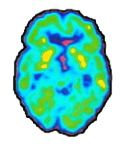
The PET Brain Scans on the right give an indication of brain function during periods of sleep deprivation compared to other brain states. It is significant to note how the sleep deprived state has a more similar pattern to Non-
Symptoms
Generally, a persistent lack of sleep may result in:
aching muscles
mental and physical fatigue
anger and temper problems
confusion, memory lapses or loss
poor concentration
reduced auditory attention
reduced ability to plan and coordinate
reduced communicative abilities
poor decision making
reduced ability to manage complex and multiple problems
reduced memory consolidation
visual awareness and recognition problems
irrational anxiety
irritability
emotional sensitivity
depression
hallucinations
hand tremors
headaches
bodily inflammation
bloodshot eyes
periorbital puffiness, commonly known as "bags under eyes"
increased blood pressure
increased stress hormone levels
increased risk of diabetes
increased risk of fibromyalgia and chronic fatigue syndrome
increased risk of heart disease
nystagmus (rapid involuntary eye movement)
increased risk of weight gain
excessive yawning
micro sleeps
symptoms similar to:
Attention-
Psychosis
Micro Sleeps
When a person starts to experience sleep deprivation they might start to experience micro sleeps. This is when the brain automatically shuts down, and the person falls into a sleep state for a period that can last from a second to half a minute. This happens no matter what activity he or she is engaged in. Microsleeps are similar to blackouts and a person experiencing them is not consciously aware that they are occurring.
Weight Gain
It is currently believed that sleep loss disturbs the endocrine regulation of energy homeostasis leading to weight gain and obesity. A reduction of sleep duration to 4 hours for two consecutive nights has recently been shown to decrease circulating leptin levels and to increase ghrelin levels, as well as self-
Bodily Inflammation
Inflammation is your body's response to stress -
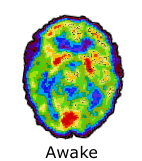
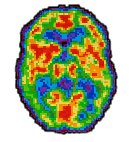

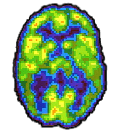

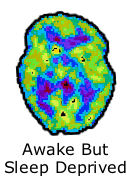
The above PET Scan Brain images were supplied courtesy of Novo-
They are copyright protected may only be printed as part of this article and cannot be used in any other document or used or stored in any format without permission.

Insomnia is a gross feeder.
It will nourish itself on any kind of thinking,
including thinking about not thinking.
~Clifton Fadiman